Creating service blueprints for an undocumented manual process
I created current- and near-term service blueprints to surface risks in an undocumented workflow and support the next phase of work.
Note: To respect confidentiality, names, business details and visuals have been anonymized.
The challenge
I was asked to map the end-to-end journey for a complex financial-services workflow operating within strict regulatory and accuracy requirements. The team needed a shared view of the process, key handoffs, and decision points to improve visibility and support future product development. When the initiative was prioritized for near-term MVP delivery, I accelerated the service-mapping effort to give product, design, and engineering a clear foundation for aligned decisions.
My contribution
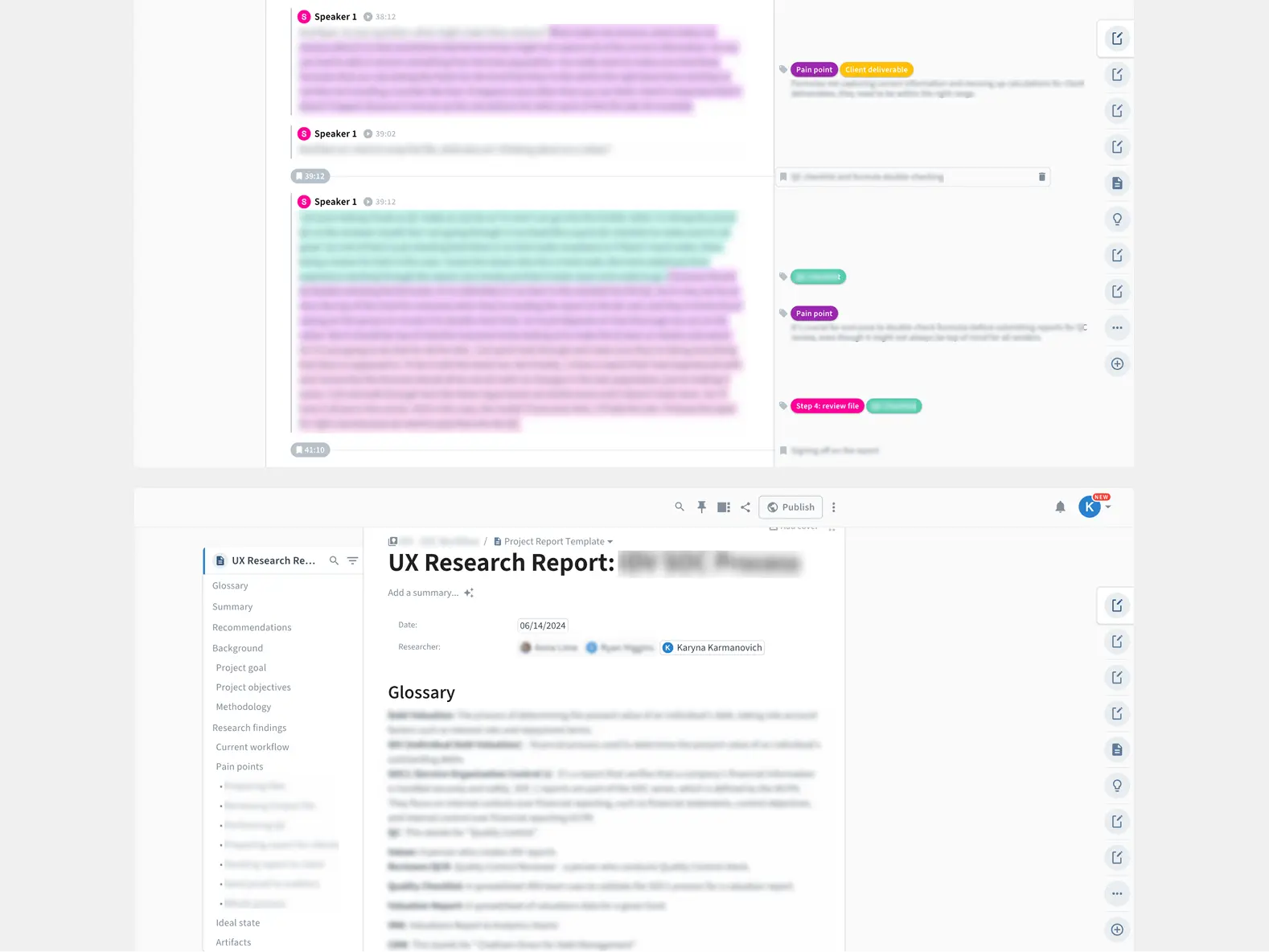
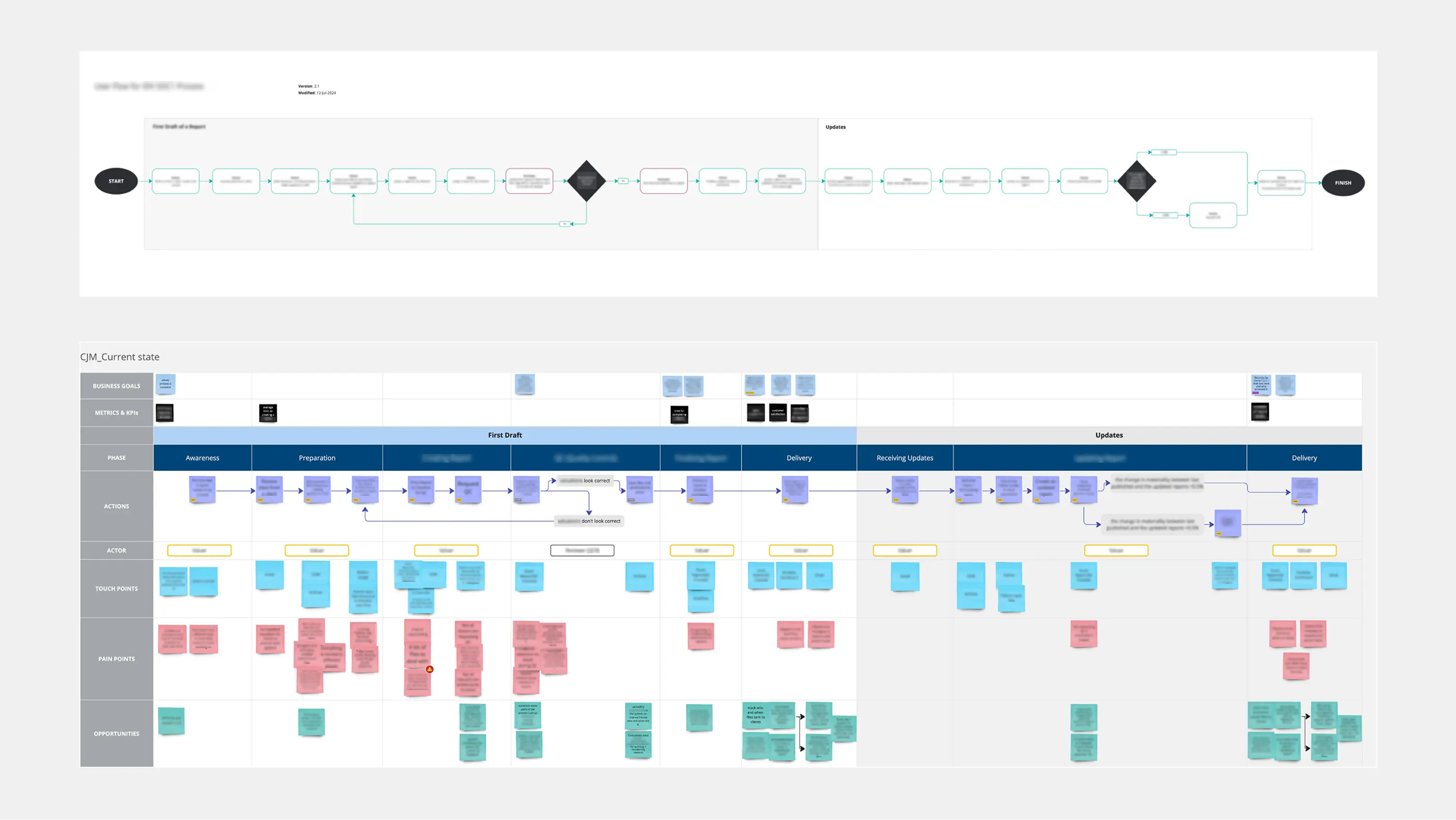
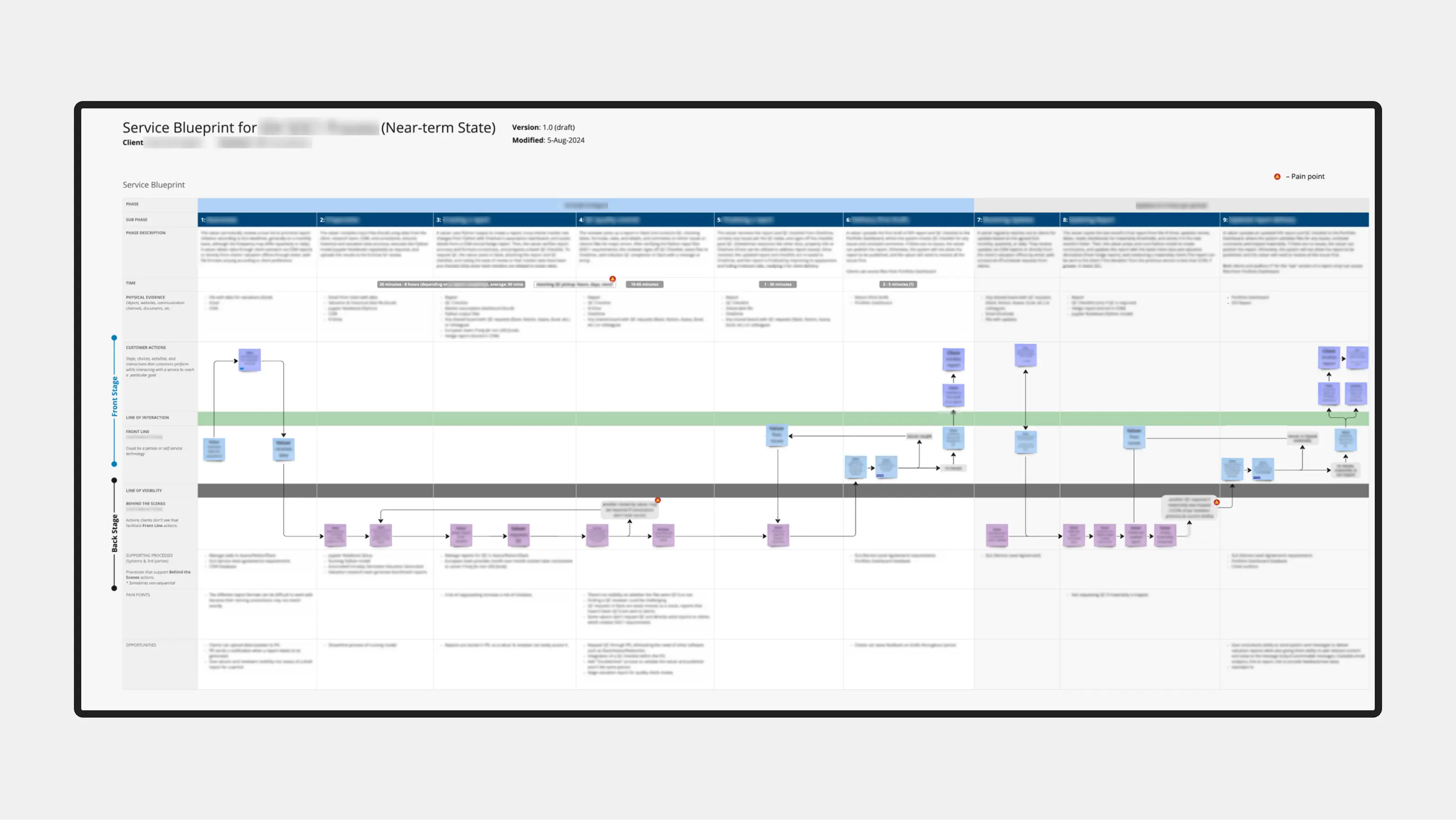
I led the service-blueprinting work from research synthesis through to the final artifacts. I created the workflow diagram, personas and a journey map that informed a current-state blueprint, and turned the team’s agreed MVP direction into a near-term blueprint. I also translated interview findings into a UX research report and shared the artifacts with stakeholders and the broader team to build a common understanding.
How I approached it
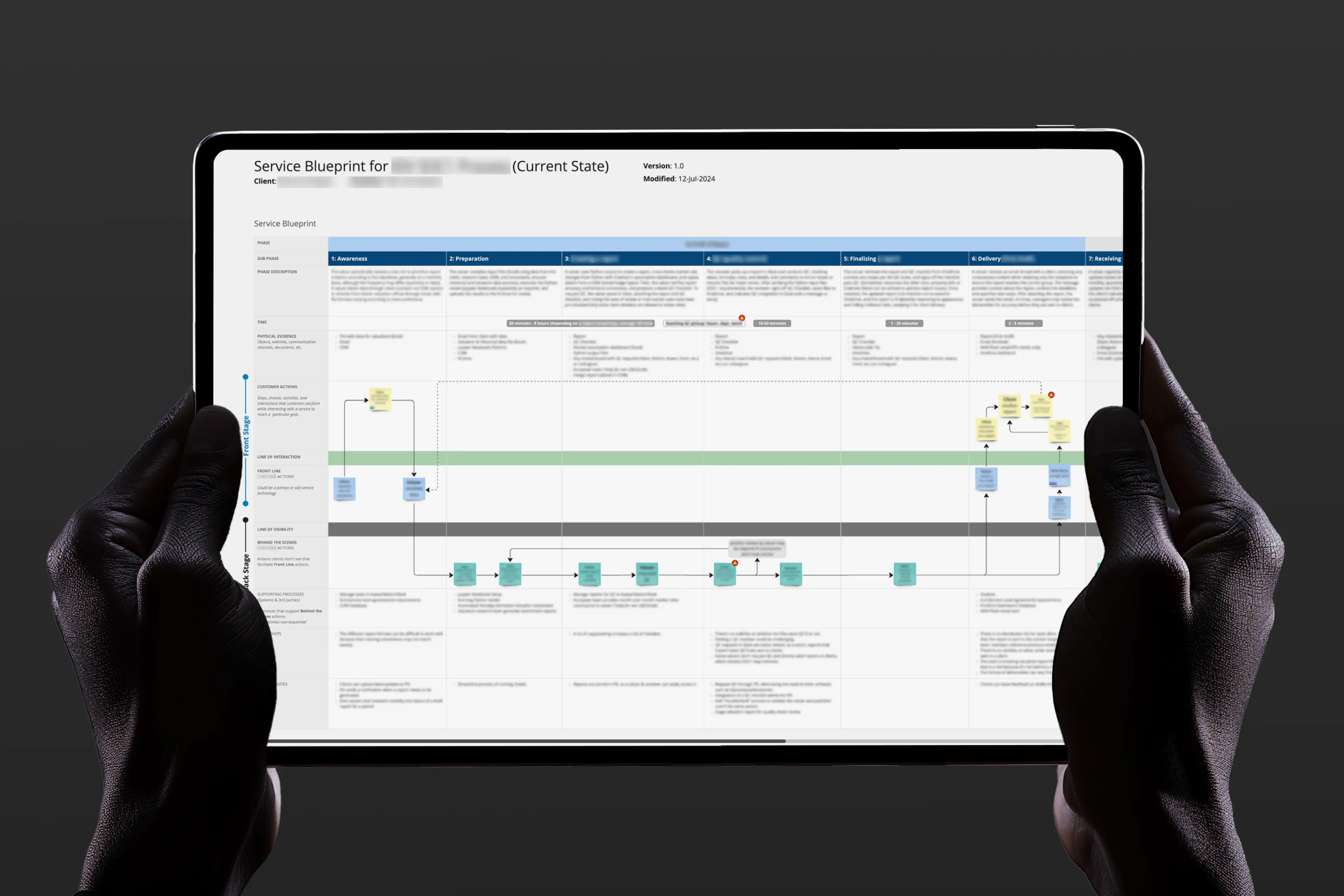
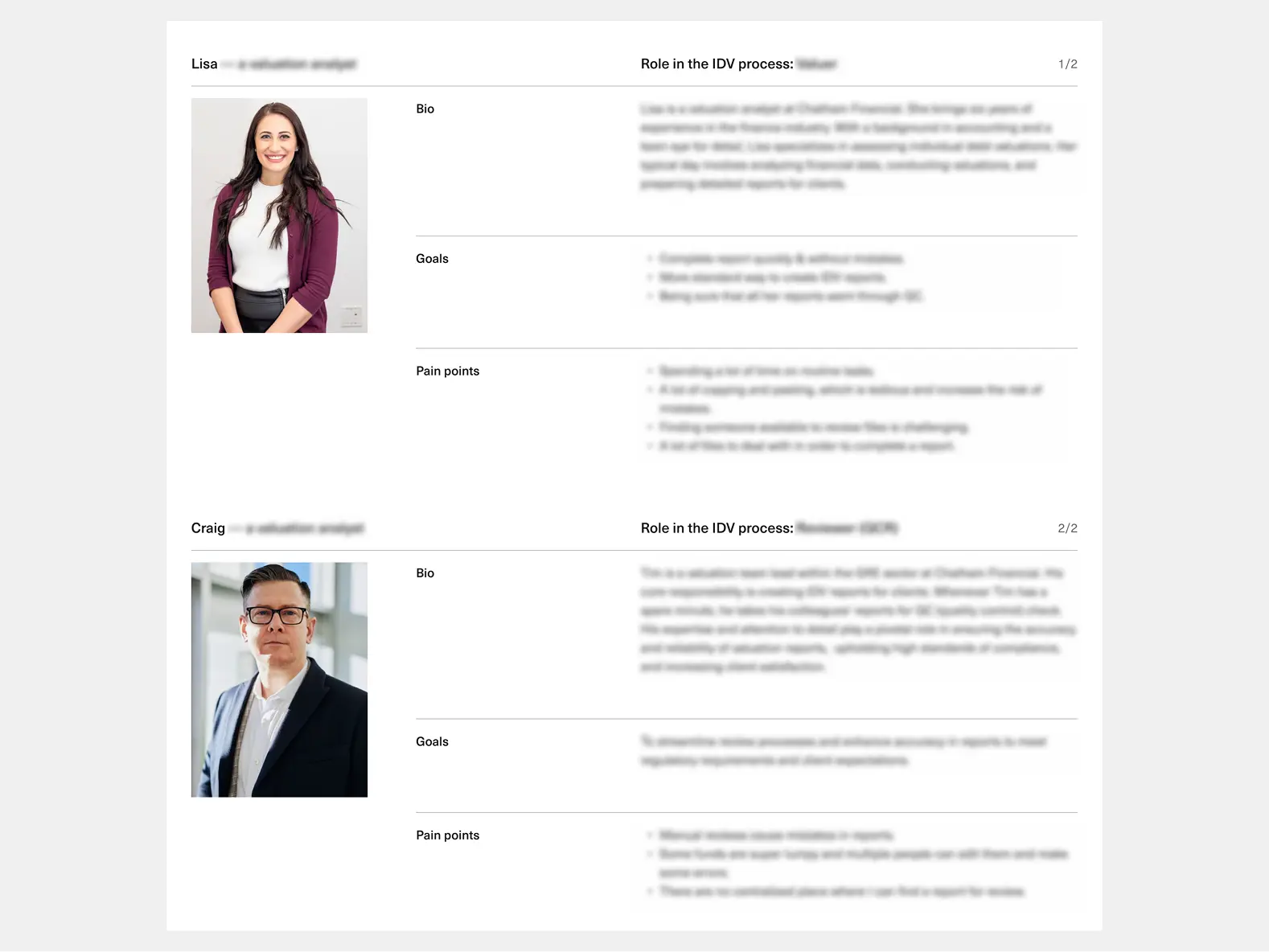
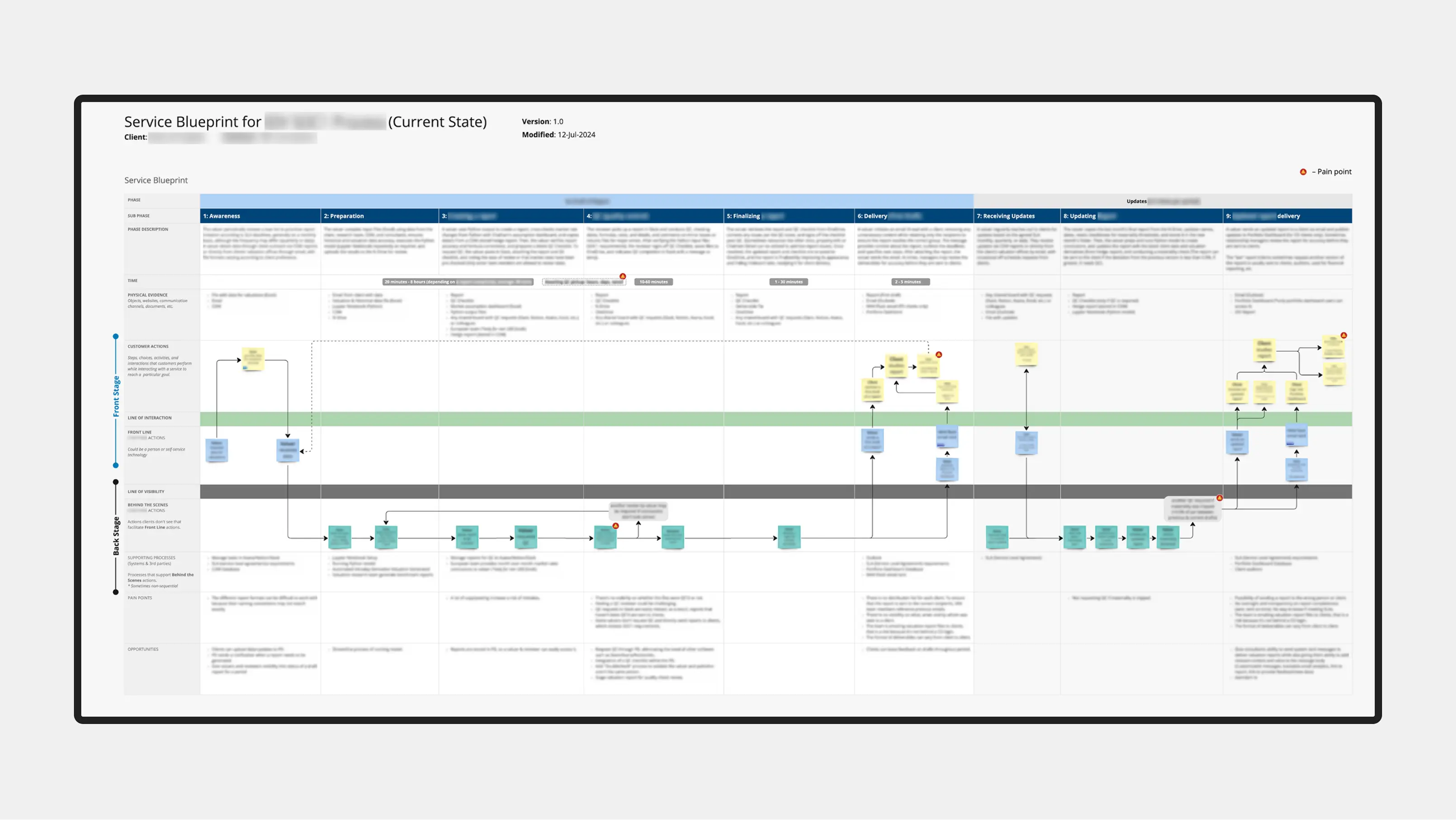
The service had not been formally documented, so I worked with a UX researcher and designer to learn from subject-matter experts (SMEs) through interviews and observation. I turned what we learned into workflow diagrams, personas, and journey maps to make the complex process easier to understand. I then created a current-state service blueprint showing how the service operated at the time. Working sessions with SMEs helped check assumptions, answer open questions, and refine the map. The resulting blueprint guided ideation, and I translated the selected direction into a near-term blueprint for the MVP.
What changed
The project gave the team a shared view of how the service worked end to end. The current-state blueprint made key steps, handoffs, and open questions easier to see and discuss across teams. It helped the group align on priorities and decide what to improve first. The near-term future-state blueprint showed how the service would work after the MVP changes, giving product, design, and engineering a common reference point for delivery.